Crossword Jam
- 4.6
- Rating
- 10.00M
- Installs
- Free
- Price
 Analysis by App-foxy
Crossword Jam is the kind of word game I can open for a few minutes without needing to prepare myself for a complicated ruleset. It comes from PlaySimple Games, and the basic appeal is easy to understand: solve compact crossword-style puzzles while moving through a sequence of scenic settings. I found it more approachable than a traditional newspaper crossword, but still capable of making me pause when a short word has several plausible answers.
That balance is the main reason I would recommend it to someone who wants a casual vocabulary game rather than a demanding daily brain-training routine. It is free to download, rated for Everyone, and has reached more than ten million installs. The store rating sits at 4.6 from roughly 426 thousand ratings, which suggests a broad audience has found the format enjoyable, although popularity alone is not a reason to ignore its limitations.
How the puzzle loop feels in everyday use
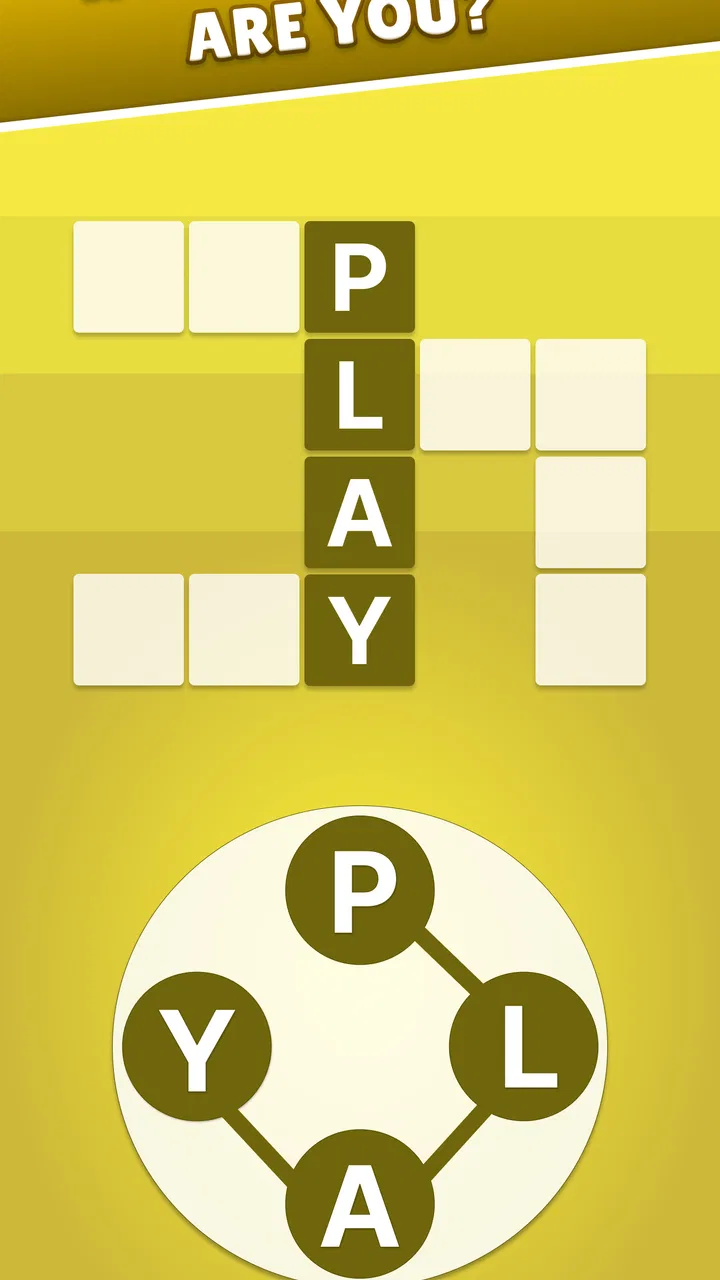
Each round presents a small group of clues connected to a crossword-like arrangement. Instead of dealing with a large grid filled with long clues, I work through short entries and use crossing letters to narrow down the next answer. That makes the game comfortable on a phone: I can play while waiting for an appointment, during a short commute as a passenger, or at the end of the day when I want something more active than scrolling.
You May Also Like

 Blood Strike: 2.5 Anniversary
Blood Strike’s Loadouts Turn Every Drop Into a Tactical Gamble
A close look at Blood Strike’s custom loadouts: how fast access to signature weapons reshapes its battle royale rhythm, rewards preparation, and narrows the gap between fights.

 Pandora - Music & Podcasts
Pandora’s Music Is Easy to Start, but Harder to Recover
Pandora’s strength is its low-effort path from a seed to a station. Its weak spot is how much confidence it asks you to place in connection, setup, and quiet recovery.

 8 Ball Pool
 Is Built on Rivalries, Rematches, and Routine
A close look at the rivalries, rematches, shared routines, and unanswered safety questions that turn a quick pool match into a persistent mobile community.

 Samsung Music
’s Quiet Strength Is Playing What You Already Own
Its reach comes less from spectacle than from dependable access to a personal library. That simplicity is both the app’s strongest retention engine and its ceiling.

 AccuWeather: Weather Radar
AccuWeather Review: A Quick, Clear Forecast for Everyday Decisions
For everyday plans, the best forecast is the one you can understand quickly. AccuWeather makes rain timing, radar, and local conditions easy to act on, with a few trade-offs.

 Hill Climb Racing
Why Hill Climb Racing Still Turns Crashes Into One More Run
A tiny car, a bumpy hill and one more upgrade: Hill Climb Racing keeps resurfacing because its simple chaos makes every near-miss feel personal.
More From Our News Desk



The compact format also changes how I think about mistakes. In a full crossword, one uncertain answer can affect a large section of the grid. Here, the puzzle usually feels more contained. I can try a likely word, see how it interacts with the letters around it, and adjust my thinking without feeling that I have ruined an hour-long session. For a casual player, that forgiving scale is a real strength.
The landscape presentation gives the progression a sense of movement. I am not simply completing an endless stack of disconnected word boards; the visual setting helps make the journey feel like a sequence. The scenery is not the reason I keep playing, but it gives the otherwise repetitive solving loop a little more personality than a plain list of clues.
One useful habit is to avoid spending help immediately on the first clue that slows me down. I usually solve the entries I recognize, then return to the stubborn one with several crossing letters in place. This is more satisfying than treating every uncertain clue as a reason to use assistance, and it often reveals that the problem was not vocabulary but reading the clue too narrowly.
Who will enjoy the design
I think the game suits people who like word puzzles but do not always have the time or patience for a large crossword. It is also a good fit for players who enjoy gradual progress and visual travel between groups of puzzles. Someone learning to become more comfortable with crossword conventions may appreciate the smaller boards because the feedback from crossing letters arrives quickly.
It is less suitable for a player looking for deep, long-form solving. Traditional crossword fans may find the short format too light, especially if they prefer elaborate clues, layered wordplay, or a single puzzle that demands sustained concentration. Players who dislike repeated casual-game loops may also lose interest once the novelty of the scenery fades.
For children, the Everyone rating makes the game broadly accessible, but that does not mean every clue will be equally easy for every age. Vocabulary, spelling confidence, and familiarity with common expressions still matter. I would treat it as a family-friendly word game rather than assume that a younger player will solve every board independently.
Progress is pleasant, but it can create pressure
The progression gives me a reason to return, yet it also introduces the familiar tension found in many free mobile games. When I am close to finishing a puzzle, a difficult clue feels more urgent because I want to keep moving. That is a subtle form of pressure: the challenge is not only “Can I solve this?” but also “Do I want to wait, think longer, or use a resource?”
My preferred approach is to treat the game as a break rather than a test of speed. If I am stuck, I put the phone down and come back later. A fresh look often works better than repeatedly tapping around while frustrated. This matters because the format is at its best when solving feels like a small personal victory, not a race against a progress bar.
The current version is 1.716.0, and the game supports devices running Android 8.0 or later. That makes compatibility fairly practical for many Android users, though anyone with an older phone should check the operating-system requirement before planning around it. I would also leave some storage and battery headroom for normal mobile use rather than assuming every older device will feel equally smooth.
There is a useful trade-off in the short rounds. They make it easy to stop at any time, but they can also encourage “just one more” sessions because completing another board feels close. If I want a game that disappears after a single minute, this may be more engaging than intended. If I want a gentle way to fill ten or fifteen minutes, that same quality becomes an advantage.
What spending changes, and what it does not tell me
The game is free, but it includes in-app purchases ranging from $0.99 to $99.99 per item. That is important context for anyone who wants a completely purchase-free experience. The range tells me that optional spending can extend well beyond a small one-time convenience, so I would approach the shop carefully and decide in advance whether I am willing to spend anything.
I do not see a reason to treat purchases as part of the core appeal. The enjoyable part is solving the clues, and paying should not become a substitute for giving a difficult board a little more thought. My practical advice is to play with a personal rule: use hints sparingly, never buy something simply because a puzzle is irritating, and enable device-level purchase protections if the phone is shared with children.
The purchase range also affects how I judge the game’s fairness. A free word game can be perfectly worthwhile when optional spending remains optional, but the experience feels less comfortable if a player believes progress depends on paying. I would not promise that every player will experience the economy in exactly the same way, because tolerance for hints, retries, and waiting differs from person to person. What I can say is that anyone sensitive to monetization should pay attention to how often the game presents spending choices during play.
There is no need to buy anything simply to understand the basic format. I would install it first, play enough rounds to see whether the clue style suits me, and only then decide whether any optional purchase has genuine value. That order matters: a large catalog of puzzles is not useful if the underlying clue rhythm does not match your taste.
Is the competition fair?
Crossword Jam works primarily as a personal solving experience for me, not as a game where I need to prove that I am better than another player. That is a positive when I want to relax, because I can concentrate on vocabulary and deduction without comparing every move with someone else’s performance.
At the same time, players who care about competitive fairness should separate two ideas. A player’s word knowledge and patience are one kind of advantage; access to optional help is another. If a game includes purchasable assistance, a contest based on speed or completion would only feel fair if everyone followed the same rules about hints and spending. I would not use optional purchases as evidence of superior skill.
My own fair-play rule is simple: I count a puzzle as solved honestly when I use crossing letters and my own reasoning, and I regard a paid or limited aid as a convenience rather than an achievement. That keeps the game enjoyable and avoids turning a casual word activity into a spending contest. It is especially sensible if friends or family members compare progress informally.
The format is better for friendly self-comparison than serious competition. I can try to improve my vocabulary, reduce how often I need help, or complete a session with fewer guesses. Those goals are meaningful without pretending that every player has identical language experience, available time, or willingness to make purchases.
Small techniques that make difficult clues easier
My first technique is to scan for the shortest, most familiar answers and leave unusual clues alone. Short words can be deceptive, but they often provide the crossing letters needed to unlock a harder entry. Guessing a rare word too early tends to create confusion, while building a few reliable letters gives the puzzle structure.
Second, I read clues by part of speech. If the wording suggests an action, object, description, or person, I narrow my mental list before thinking about individual letters. This is particularly useful when several answers seem possible. The crossing pattern then acts as a filter rather than forcing me to search my entire vocabulary.
Third, I use a pause as a solving tool. After filling several entries, I stop looking at the board for a moment and return with a fresh perspective. That sounds minor, but it prevents me from repeating the same assumption. In a mobile game built around short sessions, taking a break is often more effective than spending more time staring at one clue.
A fourth insight is to separate knowledge gaps from attention gaps. If I genuinely do not know a word, a hint may be reasonable. If I know the word but cannot see how the clue is phrased, I would rather reread the surrounding entries. This distinction helps me avoid wasting assistance on puzzles I could have solved with a calmer second look.
How it compares with other word-game choices
Compared with a classic newspaper-style crossword, this game is more welcoming and less intimidating. The smaller puzzle units are easier to fit into a busy day, and the visual journey adds a little motivation. The trade-off is depth: players who want intricate clue construction and a substantial grid may find the experience too streamlined.
Compared with a pure anagram game, Crossword Jam asks me to use more than letter rearrangement. Crossing answers provide context, so the task feels closer to deduction than simply finding every word hidden in a letter set. If I enjoy building answers from intersecting clues, that is a meaningful advantage. If I prefer fast pattern recognition with minimal reading, an anagram-focused alternative may feel quicker.
Compared with a daily puzzle that gives me one carefully defined challenge, this title offers a broader progression and more frequent opportunities to play. That makes it better for filling spare moments, but potentially less memorable on a puzzle-by-puzzle basis. I would choose the daily format when I want a ritual, and this one when I want a longer stream of casual boards.
It also differs from competitive word games that depend on live opponents. Here, I can play at my own pace and stop without leaving someone waiting. That is ideal for relaxed use, but not for players who need head-to-head pressure to stay engaged.
Questions I would consider before installing
Will it work on an older Android phone? The minimum requirement is Android 8.0, so devices below that threshold are not a good match. On supported hardware, I would still judge the experience by how comfortably the screen displays the puzzle and how responsive the device feels during normal play.
Can I play without spending money? The game is free to start, and optional purchases are present. I would begin without buying anything and see whether the natural puzzle rhythm is satisfying on its own. Anyone who finds hints too tempting should set a firm budget or rely on the phone’s purchase controls.
Is it suitable for a quick break? Yes, that is one of its strongest use cases. A short board is easier to fit between errands than a large crossword, and I can stop after a completed puzzle rather than search for a convenient pause in a long grid.
Will experienced crossword solvers find enough challenge? That depends on what “challenge” means to you. The crossing-letter process can still be satisfying, but the compact, casual presentation may not provide the complexity that advanced solvers expect from a newspaper or specialist crossword.
Should I choose it for serious competition? I would not. It is more convincing as a private vocabulary pastime or a friendly self-improvement game. If rankings, identical conditions, and head-to-head skill measurement are your priorities, a dedicated competitive word game is likely a better choice.
My trust verdict after weighing the trade-offs
My overall impression is positive, with one important qualification: I would recommend Crossword Jam for its accessible puzzle loop, not because free mobile games are automatically good value. PlaySimple Games has made a word game that is easy to understand, comfortable in short sessions, and visually more inviting than a bare crossword board.
The free entry point is useful, but the in-app purchase range means I would keep spending under personal control. I would also avoid measuring achievement by how quickly I move through the progression, since pressure can make optional help feel more necessary than it really is. The fairest way to enjoy it is to treat purchases as conveniences and solving ability as something separate.
For someone who wants a friendly word game for waiting rooms, quiet evenings, or short breaks, I think it is worth trying. For a dedicated crossword expert, a player who dislikes any purchase prompts, or someone seeking intense multiplayer competition, I would look elsewhere first. The best reason to install it is the combination of compact crossword solving and relaxed visual progression; the main reason to hesitate is the possibility that its casual loop and spending options will not match your preferred way to play.
Crossword Jam is free, rated for Everyone, and has been available since September 7, 2017. With more than 106 thousand written reviews alongside its large rating base, it clearly has a substantial audience. My final advice is to start slowly, solve without leaning on help, and decide based on how the clues feel in your own hands. If the small victories remain satisfying after the scenery becomes familiar, it can become a dependable everyday word-game companion.
FAQs for Crossword Jam
01What is Crossword Jam and how does it work?
Crossword Jam is a word puzzle game that challenges players to find words using a set of given letters. The game combines elements of traditional crossword puzzles with a modern twist, allowing players to swipe letters to form words and fill in the blanks. It's a great way to enhance vocabulary and improve cognitive skills.
02Is Crossword Jam available offline?
Yes, Crossword Jam can be played offline, making it a convenient option for users who may not always have internet access. This feature allows players to enjoy the game anytime and anywhere, without needing a data connection, making it perfect for travel or areas with poor connectivity.
03Are there in-app purchases in Crossword Jam?
Crossword Jam is free to download and play, but it includes in-app purchases. These purchases can enhance the gaming experience by offering hints, unlocking additional puzzles, or removing ads. While optional, these purchases can help players progress through challenging levels more easily.
04How does Crossword Jam support multiple languages?
Crossword Jam supports multiple languages, allowing players to enjoy puzzles in their native language. This feature broadens the game's appeal and accessibility, providing an opportunity for non-English speakers to engage with the game while also offering a chance to learn new words in different languages.
05What age group is Crossword Jam suitable for?
Crossword Jam is suitable for players of all ages, from children to adults. The game’s difficulty adjusts as players progress, offering a challenge that is appropriate for different skill levels. It's an educational tool for younger players while providing a fun and stimulating experience for adults.
Pros
- Engaging and addictive gameplay experience.
- Wide range of challenging levels available.
- Visually appealing and intuitive interface.
- Supports multiple languages for diverse users.
- Offline play available for on-the-go fun.
Cons
- Ads can be intrusive and frequent.
- Limited hints without in-app purchases.
- Some levels feel repetitive over time.
- Occasional bugs may cause app crashes.
- Higher levels can be too challenging for some.

Crossword Jam
Gallery